

My very first profitable business was importing products from China and selling them online – mainly through Amazon & eBay. I started out with counterfeits at 12-years old (which I don’t recommend—learn what’s actually legal in reselling), and by the time I was 17 I had built multiple different e-commerce brands into an empire I was proud of.
I was incredibly confused when I was first getting started. I had hundreds of questions racing around my head:
- What product should I sell first?
- How do I know which products will sell (and which won’t)?
- How do I find a trustworthy supplier and negotiate with them?
- How can I avoid scams and low-quality products?
- Just how the hell do I get started?!
When you’re trying to start a new business from scratch, you’ll find your mind running in circles unless you have a clear direction to run into…
So my goal is to make this the definitive A-Z guide to starting an importing & e-commerce business from scratch. It’s what I would do, step-by-step, if I was starting from zero.
I’ll give you every step of the process, and also give some insights on the ‘why’ behind my strategy. I’ll also be adding to this over time (as I get questions from readers), so be sure to bookmark this for future reference.
Finally – I encourage you to follow this guide step-by-step, and to avoid jumping around. Importing products from China and selling them online is an incredibly simple business model – it’s only when you do things out of order that it becomes confusing & complex.
So without further ado – here’s the story of my rise & fall in the importing/e-commerce industry, and how you can launch this business for yourself 🙂
Basic Overview: Your Roadmap

First things first, let’s wrap our heads around the concept…
This is a simple business model that’s easy to overthink. There are lots of moving parts that can feel risky or confusing. It reminds me of one of my favorite quotes:
“Everything is simple until you make it complicated”
Understand that starting this business, like starting any business, will require taking some risks. If you don’t know what you’re doing, it’s easy to end up with $1,000 worth of iPhone knockoffs in your garage (or $1,000 worth of nothing at all)…
That being said – if you’re careful, have a solid roadmap (this article), and a bit of hustle – you can build a profitable business for yourself with a relatively small amount of time/work.
E-Commerce Empire Roadmap
It’s important to understand your battle plan before going off to war…
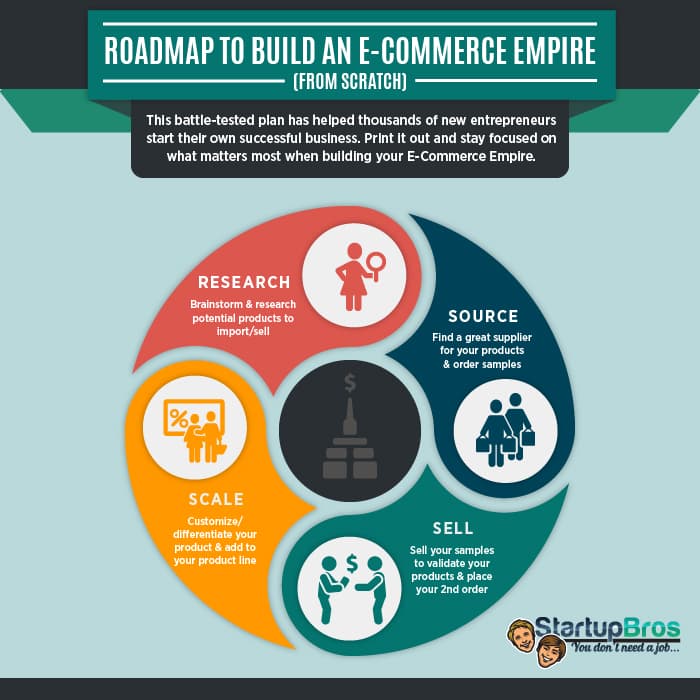
Here’s the basic game plan:
- Find a good product – You’ll need to brainstorm, research, and select a product(s) to import & sell. Most people find this step frustrating and overwhelming (with good reason), but luckily I have some tools that will help make this easy.
- Find a good supplier – Once you’ve decided on a product, you’ll need to source that product from a great supplier. It can take some digging to find them, but there’s ways to ensure you avoid the scams & increase your odds at finding an awesome supplier.
- Sell some samples – You’ll want to place a small sample order to test & validate your product (I’ll show you how I do it). This is part of the ‘secret sauce’ that most new entrepreneurs miss.
- Scale it up – Once you’ve validated your product, you can feel safe bulking up your order quantity & making changes to differentiate your products. We’ll even talk about private label branding & expanding your product line 🙂
Here’s the BIG pitfalls to avoid (all explained in more detail below):
- Don’t buy in bulk from a factory until you have their samples in your hands and LOVE them.
- Don’t let any supplier convince you they can’t ship small sample orders, they are just trying to squeeze you.
- Don’t pay with any other method but Trade Assurance or PayPal for the first 3-months with your supplier. This eliminates a ton of risk.
- Don’t buy from a company that won’t accept Trade Assurance or PayPal. What it really means is that they were shut down due to complaints.
- Don’t buy counterfeit crap. Not that there isn’t money to be made, it’s just a bad business to build (and illegal).
- Don’t buy a lot of inventory in the beginning. I started off buying 5-10 units at a time until I built up the money to reinvest into inventory.
- Don’t give these suppliers your personal email. The email will be effectively nuked and unusable for years, trust me…
Well, I hope that gets you in the right mindset. Let’s get into the beef of it. BEEF.
GET THIS CHEATSHEET FOR FIGURING OUT PRODUCT WINNERS
Step 1 – Find a Good Product to Import & Sell
Finding a great product is typically the first & last place new entrepreneurs get stuck. If you don’t know what you’re doing, it’s easy to get lost in the abyss of product research…
Luckily, this is also where I can help you the most 🙂
I’ll show you how this works in a moment, but first let me tell you how I discovered this method…
My First Successful Product
When I got started, I went straight for counterfeits (purses, wallets, shoes, workout guides, etc). I made a KILLING selling these through eBay, Amazon, Craigslist, and in-person – but quickly decided to get away from them. I didn’t want to build a business on a questionable legal foundation, and you shouldn’t either.
I gave away these counterfeit businesses to two different friends. One friend had a ton of success selling workout guides via Craigslist in NYC and delivering them by foot. The other friend one was not so lucky. He was hounded by lawyers and even private investigators, until he was eventually sued into bankruptcy (and had to give up all his fancy toys that counterfeits paid for).
And that’s why you should avoid counterfeit products. Like dealing drugs – I’m not saying it won’t make you money, because it will. I’m saying you shouldn’t do it because selling counterfeits is not a business – it’s a limited-time hustle. So don’t do counterfeits…
Going ‘Legit’
Since I was already selling products online successfully, I figured it would be easy to switch from counterfeits to legit products. However, I found out finding legitimate products to sell is a much different game. I had quite a few failures before I began to figure things out.
Here’s some of the bad products I’ve imported (and why they were bad):
- Patio Furniture – Numbers looked incredible on these – I could buy them WAY cheaper than they sold for. I bought & sold 10 units, shipped them to the customer, but 2 units were damaged in shipping. All profit (and then some) was eaten up dealing with returns.
- Lesson learned: Avoid heavy & oversize products that are expensive to ship.
- Toothbrushes – Again, the numbers looked great – I could buy these WAY cheaper than their sell price. I bought 25 and people simply would not buy them. When’s the last time you bought a toothbrush from a non-major brand?
- Lesson Learned: Avoid commoditized markets with high levels of big-brand loyalty.
- ‘Yes We Cannabis’ Shirts – Obama was running for office (Yes We Can), and marijuana legalization was a big topic – so I figured, how could I fail with these? Didn’t even test them, just bought 1,000 units (because I am smart like that). Sold 200 units, then ran out of necessary cash to continue marketing.
- Lesson Learned: Scale up slowly to keep inventory risk low & retain cash for marketing/customer acquisition
I could go on all day about my early setbacks, but that’s not what you want to hear about 🙂
Giving Up & The Big Breakthrough
After hundreds of overwhelming hours spent researching & selecting duds, I was ripping my hair out. I was trying so hard to find the PERFECT product – one that would solve all of my problems. But all I was doing was losing money.
In a moment of desperation, I was about ready to call it quits. I was going over everything I had done, and all I knew was that it wasn’t working. After many hours of thought, I decided that I would give it one more shot. I knew that the business model worked, and that I was clearly doing something wrong. So I decided to switch it up…
Up until that point, I had tried to find products in the way that most people do. I was simply looking for products that I could buy for much less than they were selling for online. But clearly, that was not working for me.
What I realized is that sourcing products is not the tough part. The tough part is finding products that you can sell consistently. So I decided to flip the entire concept on it’s head, and instead try to focus on what people were buying. Instead of simply looking for cheap products from China, I was now searching for demand in the marketplace that I could sell into – and then worrying about sourcing the product later.
Simply put – it worked…
The first product that I worked for me were Motivational Pillows, which were cheap to ship & easy to make variations. From there, I was on a roll. I sold all sorts of random products, from Competitive Samurai Swords to LED Lightbulbs – and I was making good money with all of them.
Finding Your First ‘Beachhead’ Product
You’ll probably sell a collection of random products for a while, until you eventually stumble over what I call a ‘beachhead product’…
I use the term ‘beachhead’ as a reference to D-Day during World War II. When the Allies invaded the beaches of Normandy, they secured a foothold in Europe and then expanded throughout Europe.
That’s exactly what we want to do with our beachhead product – gain a foothold in our niche and expand out into a full product line/brand from there.
For me, my first beachhead product was a specific airsoft gun. I stumbled over the product and sold a few, as they seemed to be popular. Immediately after selling these airsoft guns, I had customers emailing me asking for more. They wanted BB’s, they wanted masks, they wanted vests – they wanted to give me money for all sorts of things. So I happily obliged 🙂
Airsoft quickly became my bread & butter. I eventually stopped selling most other products to focus specifically on my airsoft business, which was selling 15-30 airsoft guns daily right off the bat.
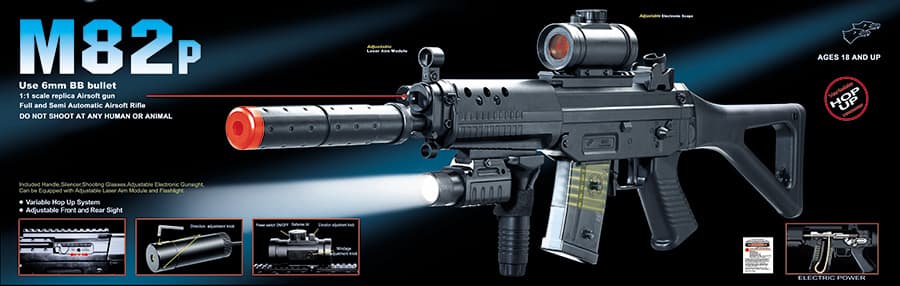
As I sold more, my relationship with my supplier kept developing and my prices kept getting cheaper. I was easily undercutting all my competition with a great product, and still coming away with a clean $10-30 profit per unit. And best of all, I didn’t even have to touch the product – my supplier even handled all shipping & returns.
I had finally done it – and it all snowballed very quickly. Hundreds of hours of frustration finally worked, and it worked fast.
That’s Great – But What About Me?
Now that you know my not-so-smooth journey, let’s talk about how you can find good products for yourself…
Finding great products to import & sell really comes down to these 3-steps:
BRAINSTORM > RESEARCH > SELECT
So let’s get started…
Step 1a: Brainstorming Products
Your goal is to find a dream supplier for ANY product you are making money on, because then you can focus on growing the sales of your business rather than on customer service and shipping.
It isn’t easy, but if you follow my advice below you will greatly increase your odds of finding a great supplier and product.
Where and how to find suppliers
Your best friend in the importing business is AliBaba. I have used it for every single product I have ever imported. I use it for my own businesses, I use it for clients, and I know a ton of people that use it. It is an awesome resource—and once you master it, 1688.com offers even deeper wholesale discounts for experienced buyers.
Don’t fall into the traps of Doba, WorldWideBrand, Volusion, or whatever other scam solutions are out there to find suppliers. I made the mistake of trying all of these when I first got started, and just ended up wasting hundreds of dollars for little to no value. Just stay away from these, trust me.
With AliBaba, you will be looking at only Gold members. I don’t care how awesome of a deal you get from a non-gold member, or how many factory certifications they have, you DON’T buy from non-gold members. Just following this rule will help you to avoid 98% of the scams and bad suppliers. Any other certifications or whatever are just icing on the cake.
You really want to find a supplier that will do cheap samples, offers PayPal payments (even at an increased rate, use PayPal), and seems to respond to your communications quickly and effectively.
Open up AliBaba for now, as you will be jumping back to it frequently while researching product to know if you can make a profit. If you need more clarity, we wrote a detailed post to guide you with buying from Alibaba and avoid scams.
Where and how to find products
There are a few limits on what kinds of items you want to sell –
- It needs to be small and light – Trust me on this, you don’t want to deal with the headaches that come with shipping furniture or kitchen appliances around the world. You want something that is going to be cheap to ship around, because shipping is going to eat your profit margins alive.
- It needs to be a simple item – What I mean by this is you want something that is simple to manufacture and has a relatively high margin of error. Most of these factories are not going to have the highest quality standards in the world, so the greater the margin of error you can put up with while keeping your customers happy the better. Competitive katana swords did not have a great margin for error before customers started noticing, as they were vigorously slicing sh*t with them all day (slicing rolled up Tatami Mats to be specific).
- Keep it in the $10-200 range – In my experience, it becomes very capital intensive and much riskier if you are selling items any higher than this. Higher ticket items are usually harder to ship, require higher quality control, and really magnify your mistakes when first starting out in importing. I have yet to find success outside of that price range, so I cant suggest you take any chances in it, but of course use your own judgement.
- Don’t sell what you buy – Devan made a great point when I was speaking with him that you can’t sell items that you buy. Most of us buy electronics, clothes, food, and other essentials. I can tell you right now that you are not going to compete in any of those markets. You really have to niche down in this and find a nice little nook for you to sit in.
- Don’t go seasonal – You want to find items that have a consistent base of buyers. I am sure there is a bunch of money to be made in selling Christmas stuff and winter clothes from Asia, but it is going to be extremely seasonal, and you are probably going to end up with a ton of worthless inventory.
Other than that, you are really free to explore whatever comes to mind.
What I would do is go onto a few sites and browse around –
- Alibaba – You should have this open already, but I often look around AliBaba to see what items are being promoted and check around the sites below to see what kind of margins I could get. For instance, right now there is a 4 year Gold company (online now!) selling LED Light Bulbs for $2.65/unit. Even better, they do Escrow, and have onsite inspections from Alibaba. I can quickly go over to Amazon and see these same bulbs selling for $9.50 – 11.99, a VERY healthy margin! And that’s just the first thing I looked at! There is a niche right there.
- eBay – Check out the completed listings on eBay to see what kind of prices you can consistently sell items for. I often use eBay auction descriptions also to gain some knowledge on a product if I see it is the exact same. Prices are the main thing here though, you get a really reliable indicator of demand. You have to click on the side bar menu to get to completed listings, here is a picture.
- Amazon – I go to this page and check out all of the different tabs for “Movers & Shakers” and whatnot. I click around the categories and drill down to find things I think may not have a lot of importers in already. Again, typically weird items, like LED bulbs, skateboard parts, and katanas do well, so I try to find weird things that catch my eye and compare them against stuff on Alibaba.
- Other tools – mySimon Top Searches, Shopzilla Top Searches, Kaboodle Hot Picks
Just keep looking through the market data on those sites and comparing it against what you can get from Alibaba. It may take some time, but eventually you will naturally learn what works and you will start finding great product opportunities left and right. If you really have issues finding a product, comment below or email me and I will see if I can help [will at startupbros dot com]
Eventually you’ll find some opportunities that you want to move forward with. The next step is to start talking to suppliers and getting your hands on some samples. Don’t worry, they all speak english (kind of)…
Indentify & Mail Key Suppliers
Now that we have a product, we can start sorting through suppliers and contacting the ones that look promising.
All I would do is –
- Search for LED light bulb in Alibaba with the correct filters – You should have already been doing this before to check your product costs in the previous steps. At this point though, we want to switch to searching for “Suppliers” rather than “Products”, as seen in the picture below. I typically start with filtering by “Gold Supplier” and adding “Onsite Checked”, “Assessed Supplier”, and “Escrow” in that order until I am down to 20-30 suppliers. If there are still a ton, that is fine. Just try to find some way to narrow it down to the very best and take the 20-30 top ones.

- Contact the good ones – Now that you have a list of the prime suppliers for your product, you want to contact them and get some additional information. I usually just ask about their MOQ (Minumum Order Quantity), payment and shipping policies, sample policy, and a price list or product spec sheet. They usually have all of this on hand. IMPORTANT – Don’t use your personal email for this stuff, as it will be spammed into oblivion for years! Asia is not quite as serious about their emails as we are 🙂
- Converse, get a feel for things – Now see who messages you back and how serious it seems they are taking your business. Keep in mind that they are competing for your business at this point, and have no idea if you are looking to put in a $100 order or a $10,000 order. Their customer service at this point is a good indicator of where it will be in the future. Don’t be afraid to haggle and engaging in some price warring, they are much more used to that in China. It isn’t uncommon to see an item start at $200 and be sold for $20 in a Chinese tourist market. I could write a whole post on price negotiation, but the main thing with this is you have to low-ball your first counter offer to anchor the price possibility window at a lower level. You should get by fine with that.
- Samples! – Ah, finally….the fun part! Now we get to put in some small orders to get samples shipped directly to us. I usually get samples from 2-5 suppliers I am considering, but never just one. SERIOUSLY go over these samples when you get them. Also take note of shipping times, costs, damage, etc. Put the items through some stress, check every last nook and cranny of them. Think about how customers will be using them and push the item harder. You need something that is going to stand up if you are going to put your name behind it, so find something to be proud about selling.
*Note on Minimum Order Quantities* – I had a lot of people mention to me that the MOQ posted by many Alibaba manufacturers is extremely high, so I figured I would paste my response here –
The minimum order they list is generally not concrete, and is most of the time their average or desired order size. There is no way to know for sure without messaging the suppliers directly, which is why I go for 15-30 initially.
In my experience, Chinese factories will go through many hoops to work with you on order sizes, unless they are a MASSIVE factory that only ships via sea. If they use normal air shipping at all, they shouldn’t mind sending out even a single item via air (which is what they do with samples anyways).
Again, with some items it will be different than other. For instance I looked into selling LED lighting that attaches to the sides of buildings, and the margins looked great, but the MOQ ended up being somewhere around $5,000 of lights due to the purpose of the item (to run down entire high rise buildings). I skipped over that one.
Another option is AliExpress.com, Alibaba’s site for smaller orders. You will generally get better prices for the same amount on Alibaba if you are willing to put in the effort to communicate with suppliers, but AliExpress is always an option. So we wrote an article you can use if you choose to buy products on Aliexpress.
After all of this, you should have at least one solid supplier for a product you know will sell. Guess what’s next…
Step 2 – Selling Your Product Through Existing Sales Channels
At this point, you are going to have to make a decision about your inventory. If it were me, I would invest the couple hundred bucks and buy 5-10 pieces of my product to get started. You can certainly buy one at a time to start and that will work, it will just be a slower start.
I guess now is a good time to mention that I have not found drop shipping to be a viable option for somebody just starting out with a new supplier. The only times I have ever had successful drop ship relationships with suppliers is after a long and prosperous history, at which point they work with me to get their American distributors to drop ship. More on that later, but I thought I would mention it as you don’t want to do that just starting out, it almost always ends with unhappy customers and banned accounts.
Anyways, you need to get a few pieces of inventory and start selling them.
I only suggest using TWO of these THREE sales channels when first starting out – Amazon, eBay, Craigslist
Notice I did not say spam your friends on Facebook and every forum you can find about it. That is a ton of work and will produce very little result for you. Not once have a I tried to sell things to my Facebook friends, I barely even tell them what I am working on unless asked.
It is relatively easy to set up shop on all of these – I would just look at what the top sellers of your products are doing and then try to improve upon that. Most of the time, the copy text used in eBay and Amazon ads is free domain from the manufacturer, so you can get a lot from other sellers and simple Google searches.
Within a day or two after getting your product up, you should begin making sales. This is when things start to get really exciting. Just ship out your products at the closest post office and wait to see what happens. Make sure you ship as soon as you can and pack everything well obviously, but I am assuming you guys know how to ship things so I won’t go into much detail. Make sure you ship immediately, and make sure you pack it up well. I would also suggest throwing in a thank you note with a website or some way to turn these guys into recurring revenue (see below for more on this).
You should know pretty quickly if you are making money and what the problem areas are.
Within a month it should be painfully apparent if you need to find a new product or if you should scale up your current product.
If you can’t make a profit with your product on those sales channels, then I don’t think it is worth it to put any more effort into that specific product, and I would look for another product to sell.
Given that you are finding success with your product and have no deadly hiccups (lucky those don’t exist…), let’s move on to scaling this baby up.
Step 3 – SCALE!
After I had my airsoft guns up on eBay and Amazon, all I had to do was keep track of inventory and shipping. Being 15 at this time, I was ecstatic.
I slowly started to add more products to eBay and Amazon, started sending out promotional materials with my shipments, began advertising, and started a brand name behind my online business. My 20 order per day average quickly swelled to 30, 40, 50 sales per day.
Keep in mind that NONE of this would be possible if I didn’t find an awesome supplier in the first place. If you’re reading REALLY closely you’ll notice that I was 15 now, and it took a full 2 years of many mistakes and marginal success before I got to this point. Hopefully from reading this article, you can skip most of those mistakes and get right to the success.
I didn’t really know what I was doing and was kind of just throwing money at things and seeing what works. It was an awesome learning experience for me, and I learned a ton about what works and what doesn’t work in marketing and growing online sales.
Here is the stuff that I did to scale up my sales that will probably work for you –
- Advertising with Amazon and eBay – I always made a solid return with these advertising programs, specifically Amazon.
- Listing yourself on other sales channels – I eventually made an eCommerce store so that my products could be listen through the primitive versions of Google Shopping, Bing Shopping, and every other shopping venue I could find online. If I could put my items up and sell through them, I did. And each new channel gave me a little bit of growth for free.
- Brand yourself – The days of branding yourself as “GreatAirsoftCompany.com” are long gone. You have to find a good brand name that resonates with the crowd you are selling to, and it will exponentially reward you over time. You can read this post to see how I decide on brand names.
- Aim for recurring revenue – I started seeing solid growth from including coupons and promotional materials in each shipment. Eventually, I set up an email and SMS subscription that would send them deals and updates on airsoft items. I also set up a monthly subscription for airsoft pellets, which I couldn’t sell on eBay due to very small margins. The key here is to focus on siphoning off buyers from the pre-existing sales channels into your own lists and databases. That way, you can market to them for free on demand, rather than having no way to contact them after their first order.
And the stuff that didn’t work
- PPC Advertising – Advertising outside of where I was selling never worked for me very well on this, however I was also very young and didn’t know much about running PPC campaigns. If you are already good with PPC, then try it. If not, I wouldnt even try until you have some money to lose.
- Social Media – Just isnt going to work for importing. MAYBE you can find a way to do this if you are a really, really good social media marketer, but 99% of people are not going to get any sales from social media with this.
- Pretty much anything I didn’t mention above – If I didn’t mention it above, I didn’t make enough money with it to remember it. I would stick to just the things I know work, which are littered all over this article.
If you are unsure about a marketing method you are thinking about trying, just comment below or email me and I will tell you what I know about them…
Keep in mind that the only money I was putting into this was reinvested earnings. You can certainly spend out of pocket to grow faster, but my goal in this post is keeping your risks low while still growing, and bootstrapping (funding your growth from internal operating revenue) is the best way I know to do that.
If you follow this tutorial, you will eventually be where I was – making a solid 50 orders a day. At this point shipping and inventory are going to really start taking a toll on you and your time. You’ll want to work on moving in one of two directions –
- Negotiate better terms with your supplier – Once my supplier knows I am a valuable contact who will make him solid, easy money day in and day out, I am his golden boy. Now you can start to negotiate prices and shipping terms. I usually try to get some price cuts, but my main thing is getting the factory to drop ship (generally through a US office or distributor). If the factory can ship to my customers for me and handle returns, my business is next to automated. This is where I got with the airsoft stuff, and I loved it. A true “4 Hour Workweek“.
- Start outsourcing the processes – If you cant get your factory to drop ship to customers for you, you are going to want to get rid of that aspect of your business somehow. You will be making enough money by now to hire somebody to do the shipping for you locally. Try to get somebody local (a friend or family member) to start, as it is much easier, safer, and cheaper to manage a friend than an employee. Hire a VA to send the orders to your friend, keep your listings running smoothly, respond to customers immediately, and order inventory.
If you get past this point, it is really up to you where to take it. I preferred to keep it at this level (automated cash flow), but you could certainly grow this as large as you wanted to. There is no real limit on how much money an importing business can make, and you have built a solid foundation to build off of.
New Post* The Ultimate Guide to Sell on Amazon in 2019
The Fall of My Empire
At this point, there was very little that could go wrong. Short of some horrible unforeseen event taking place, I had a steady stream of automated income coming in – one of the first ones I had ever built.
Then there was a horrible unforeseen event…
I don’t remember the exact circumstances, but the Chinese ports suddenly stopped shipping airsoft guns out. For over 3 months, I couldn’t get any airsoft guns out of China.
I know it was more than 3 months, because that is when I was forced to throw in the towel.
I searched around for a replacement supplier from anywhere I could, but the prices had just skyrocketed. On top of that, I had a bunch of orders I couldn’t fill and angry customers…
With many new projects sprouting up, and being only 16 at the time, I refunded everybody and moved on…
I did make enough money to invest elsewhere, most of which was lost on other ventures. I learned more than I did in my entire schooling career with this business, and I hope I communicated everything well enough to expedite your learning curve.
The only thing to do now, if you haven’t been this entire time already, is TAKE ACTION! If this strategy intrigues you, get out there and at least try to put this stuff into action. Make it happen!
Please comment below if you have any problems, questions, or suggestions with any part of this – I will be responding to everything immediately for the next couple of days.
Good luck, and talk to you below!
Note – I have since written a follow up to this post called “Step-by-Step Guide on How To Find A Profitable Product To Sell”
2047 Comments
Amazing article! Really enjoyed it, thanks a lot :)
Hey awsome article! I have a few questions. 1. How could you tell if a product is really selling on ebay? Is there a history somewhere or are you just using common sense? 2. You suggest in the begging looking for suppliers who will sell only 5-10 products. It seems a lot of suppliers have very large minimums. Are we just looking for the gems? Or am I missing some sort of haggling thing? Again thank you for sharing your experience! I wish more people were like you. - Z
Glad you enjoyed it Lamine, thanks for reading!
Hey Zak - 1. I should add a picture in the blog post, but in eBay there is an option to only view completed listings. Then you can quickly go through and see which products are selling at what prices, and at what price they stop selling, as well as frequency. 2. I answered this for somebody else on Reddit, so I am just going to paste that response here if it is alright - "The minimum order they list is generally not concrete, and is most of the time their average or desired order size. There is no way to know for sure without messaging the suppliers directly, which is why I go for 15-30 initially. In my experience, Chinese factories will go through many hoops to work with you on order sizes, unless they are a MASSIVE factory that only ships via sea. If they use normal air shipping at all, they shouldnt mind sending out even a single item via air (which is what they do with samples anyways). Again, with some items it will be different than other. For instance I looked into selling LED lighting that attaches to the sides of buildings, and the margins looked great, but the MOQ ended up being somewhere around $5,000 of lights due to the purpose of the item (to run down entire high rise buildings). I skipped over that one. Another option is AliExpress.com, Alibaba's site for smaller orders. You will generally get better prices for the same amount on Alibaba if you are willing to put in the effort to communicate with suppliers, but AliExpress is always an option." Thanks a lot for reading Zak, and let me know if there are any other questions you have!
I really enjoyed the article. What was your experience with getting the merchandise through customs? Were your orders always by air or did you dabble with larger container shipments?
Will, Great article. Really cleared up a lot of the questions I had. It makes the process really straight forward from here on out. I guess finding that nice product niche just comes down to some hard work and diligence. Well who woulda thunk? I guess I still have to remaining points off the top you could address here or in another post. One reservation I have with the above process is I guess it just seems to good to be true - if it's as simple as finding the right product, won't other people already have identified the right niche? Maybe I'm just shooting myself in the foot before I get off the ground but I just can't imagine that there's so many easy loopholes left to exploit. Or is it just a matter of becoming yet another seller of a popular product? Sure, 29 people already sell fluorescent bulbs to customers in the US over eBay, but since 3000 are bought everyday, some of that business is bound to trickle over to number 30. Also, why do you think we shouldn't buy and sell that which interests us? Isn't the first rule of business sell what you know? Why couldn't a guy make money off of clothes or small electronics? Surely there's an exception to this suggestion. Otherwise keep up the good work. I'd love to see you continue this theme in your posts with even more specific information. You could even try to get back into the game and make some cash and document the whole thing. Make an even more step by step guide (this post is pretty damn good start though.) Thanks, Devan
Thanks a lot for reading Alex. I never had much trouble with customs (until they banned airsoft shipments temporarily). The supplier usually dealt with the customs when sending them out, and I only sold domestically after I got it. Any good factory/distributor is going to be going through customs enough to know how to get through smoothly. Even when I was doing the counterfeit goods, I never had an issue with customs (and then there was a real risk of big losses!). I think most Asian suppliers will be able to handle this with no issues for you. Back in the day I always ordered by air, and never wanted to deal with FOB sea shipments. Really though, it is not too difficult to import a container, you just hire a trucking company at the port to bring it to your warehouse or whatever. Nowadays I import via air and sea depending on the size of the order, and work with clients that ship full containers in regularly. Unloading and storing the product efficiently is usually the bigger problem at this point. Hope that helps!
Hey Devan, Glad you liked the article, I was worried it might have grown too lengthy. I think you are correct on most of your thoughts about product/niche selection. I had the same reservations when I was getting started with this and honestly I think they really took a toll on how quickly I found success with it. There are products out there, they are just hiding in places nobody thinks of. You basically want to jump back a forth from the "hot product" tools I posted (ebay completed listings, amazon, etc) to Alibaba and see if you can find something with a good $10+ markup. Find a few of these and look around the ebay and amazon listings to see how many sellers there are, how consistent the sellers are, if all the items are being bought up immediately, if most of them are just sitting there with no interest, etc. If you do this for an hour or two, you should start finding at least a couple products with $10-20 markup potential. When I went and did it how I described it, I found 2 or 3 decent products in the first 20 minutes, so I know there are some still out there. The reason you can undercut in some markets is because you have no overhead. In airsoft for example, all my competition were running brick-and-mortar stores with inventory and employees and rent and utilities. I was sitting at home in my underwear in front of my computer instead of going to school, and getting the same prices they were (and eventually better). I am sure there are more reasons than this, but I think this is the main one (I'll probably add this point to the article) It is also good to find a market like you described, with ultra-high volume and few sellers. Amazon is great for this, and I will probably post soon how I still sell some things like this on Amazon on the side. Easy income really. I believe that you have to be passionate about your business 110%, totally agree with you there. If you wanted to create a fashion line, you'd better have a hell of a lot of passion, you'll need that and some more. However in this specific case, when we are basically engaging in arbitrage, I think it is best to focus almost completely on the margins. The only reason I did this was to make money on the side, and that required me focusing purely on margins. If you want to start a brand behind your imports though, you definitely want to pick something you love and can do for years to come, and you definitely don't want to just focus on the margins. My friend Kevin at SKAR Audio technically started out running an import business, but eventually became passionate about it and expanded it out into the SKAR brand, now selling over $100k of product per month. He turned his imports into a real brand and real business, and it required an incredible amount of work and passion. Much more so than me sitting around on my computer :) Also, I am sure there are some electronics and especially clothing pieces out there that you can make money on, I just haven't in the past so I can't really vouch for them comfortably. I can tell you though, be extra extra careful with electronics, as people get burned in that niche much more than any other. Great idea on getting back into the game too, maybe I will record a live case study! I love talking with you man, every time we talk we build up some amazingly valuable content and ideas! Thanks a lot for everything Devan, talk to you later
This article really hit home for me, literally. I work at the Port of Los Angeles and Long Beach which are the busiest ports in the USA. I see these ships come and go every day, and I have stood by and worked with containers 1000's of times. When people ask me, "Do you know what's in them?" my reply is, "nope." It's not my job to know; it's my job to move them around the yard. I followed the advice in your article, and I came across a product with a good $10-15 markup. It seems to sell well on Ebay (1-2 a day) and Amazon only has 1 seller. I'm going to continue to follow your advice and go through with it trying to sell it myself, but first I am going to get my hands on some samples.
So awesome to hear you are taking action Raymond, nothing makes me happier. I think you should definitely get some samples on that product, and congratulations on finding a prime product opportunity so quickly. Makes me think I gave decent advice :) I would love to help you on your way to success and feature your story on the blog, email me if you are interested! Either way though, feel free to hit me up in the future with any questions, problems, or concerns. Congrats again on your initial success!
Wow, excellent article! I'm so inspired right now. I'm a student and business owner already, but I've been looking for new business opportunities. I love online retail (my current business is an online vintage store), and I want to suppliment my income with other sources. I'm really excited to look into this, and your post was incredibly detailed, so that will definitely help in getting started. Many thanks! Cheers, Dani
Will, A lot of informative stuff in this article! As far as taxes/tariffs go, did you run into any implications or astronomical expense, or was the burden of taxation borne by the supplier mostly? Also, at what point did you feel comfortable suggesting the product be drop shipped? Ideally, I would like to find a product in the 20-40 USD range that I could realize a pre-tax margin of 75% and also something that is more defensive and less vulnerable to macroeconomiic conditions both domestically and abroad. Any suggestions would greatly be appreciated. Thanks!
Thanks a lot for the kind words Dani, I am glad you got some value out of it. If you are already running an online store, you will probably find great success with importing. The more you know about getting products up and selling, along with marketing them on the back end for recurring revenue, the more potential the importing opportunity has. Good luck, and please let me know if there is anything I can help with!
Thanks so much for reading Chris. With the smaller orders (under a pallet's worth), my suppliers generally shipped by air and most of the importing/shipping expenses were built into my product cost and taken care of by the supplier/shipping company. I wish I remembered how it exactly came about (I could probably go way back in my emails and find out), but from memory I think I started sending my supplier just straight SKU, quantity, and address for them to tally up and send to me. I was just copy and pasting them from my internal excel spreadsheet I was keeping because I was getting lazy with it. After about a month of that, my supplier mentioned to me that he has a US distributor that they use to ship single orders to customers in the US, and that he could get me set up within that process if I wanted. I of course accepted and my job became a hell of a lot easier. I also wish I had more advice on how to know when to ask for drop shipping, and maybe I will go back into it and do a live case study or something to find out. But, just speaking from what I know certainly works, I had to develop a great relationship with them before we had the mutual trust built up for that to be a possibility. As for the products that you are looking for, you are describing a dream products. Not that it is impossible to find, but it is going to take a bit of trial and error and work before you find a perfect product. To meet the specifications you mentioned, I would guess staple items (forks, underwear, lighters, lint rollers, weird stuff like that), maybe some toys (like those big inflatable transparent balls people can get in and run around in on water), and maybe some hobby items (RC airplane parts, RC drift car wheels, etc). Again, it is always going to be some weird product you'd never think of that turns out to be your bread and butter, you really just have to get out there and start looking around. I won't lie, it takes some time (though much less with this article). Hope that helps, and dont hesitate to hit me up with additional questions! Thanks!
I do have one question to start with. When comparing items on Amazon's best sellers list and Alibaba, is it important to find the same brands? For example, if I found a nail dotting pen by Shany Cosmetics on Amazon, is it important to try to find the same manufacturer on Alibaba? I don't even know if that is possible (I'm pretty new to Alibaba, so I'm trying to familiarize myself with it). Can I just find a comparable nail dotting pen and try to sell it? Thanks!
I really enjoyed this! But, the end of your blog is a business ending crash! Was it simply because of the product? Or, did the market go away, did the suppliers go away? And, if it was the suppliers, what's to prevent any other product having the same fate?
Hey Dani, It really depends on the product, but it would be prime if you could find the same nail dotting pens that are selling on amazon, because then you can list your items directly on the sellers page for a product that is already selling itself. However, you could easily take a different brand of nail dotting pens and sell them on eBay or any other channel, because you know people are buying a similar item on Amazon. Then it just comes down to positioning your pens well. In the light bulb example, I found the exact bulbs that were selling for a very healthy markup. That is ideal, but even if it were a different brand, light bulbs are pretty generic and people likely buy all sorts of different kinds all over the place. It would be safe to say I could even make a new listing with new bulbs and spend a small amount on advertising the listings and come away with a very healthy profit. I hope that answers those questions for you, let me know if you have any other questions. By the way, read your blog and loved it! Left a comment also :) Good luck to you, Will
Thanks a lot for reading it! I tried to cover it a bit in the article, but what happened to me was kind of a rare fluke. The Chinese and American Customs were having some dispute about weapons and weapon look-a-likes, so airsoft guns got piled into it along with my knives and other things I was selling less of. China started holding all of those at their ports and not letting them go for whatever reason it was (there wasnt much news or anything about this, just people talking within the industry). It ended up being 3-6 months before any of these items were smoothly going through both customs again, and by that time I had lost a lot of the value in what I had built. I could have gone back into it or changed products, but being 16 I decided to do other things :-) Hope that helps!
Great post, I really enjoyed reading it. I am intrigued that you made a business mainly by building connections over the internet. These are great times we live in. You spoke about how you look for niche products to sell in the amazon best sellers list. I am wondering if you could expand on that. What criteria do you look for in a potential product? Do you import generic items of brand name popular things?
So I actually took a step forward last night and found a decent product for a low price, did the comparison on amazon on ebay and found a good margin. When I contacted the company in China, they told me their FOB price was to their port and that I am responsible for paying for the shipping price - understandable. He quoted a fedex rate (~$360) from China to Louisiana (I'm in New Orleans) which added about $6 per piece, which still gains me a margine of about $15 a piece. Now my question. When using these express carriers, are their quotes typically adding in the customs tariffs? Or will there be another unexpected charge when they arrive in country? Thanks again!! -alex